How I Fixed My Balance Without Fancy Moves – Just Daily Habits
You don’t need gym gear or magic tricks to improve balance—just small, smart choices every day. I used to wobble getting off the couch, but over time, simple lifestyle tweaks changed everything. Turns out, balance isn’t just about your legs—it’s your brain, posture, and habits working together. This is how real progress happens: quietly, consistently, and within anyone’s reach. While many assume balance is only a concern for older adults, research shows that subtle decline begins as early as the fourth decade of life. The good news? You don’t need dramatic changes to reverse it. By understanding the systems involved and adjusting everyday behaviors, lasting improvement is not only possible—it’s natural.
The Hidden Crisis of Poor Balance
Balancing on one foot while tying a shoe. Stepping off a curb without hesitation. Walking on a slightly uneven sidewalk. These actions seem routine, even invisible—until they’re not. For many people, poor balance creeps in silently, unnoticed until a stumble or near-fall brings it into sharp focus. Yet, scientific studies show that balance function begins to decline around age 30, with measurable changes in stability, reaction time, and postural control. This decline accelerates without intervention, increasing the risk of falls and limiting mobility later in life. What many don’t realize is that balance is not simply a physical trait like strength or flexibility. It’s a dynamic process involving multiple body systems working in harmony.
At its core, balance relies on three key inputs: the vestibular system in the inner ear, which senses head motion and spatial orientation; the visual system, which provides information about the environment; and proprioception, the body’s ability to sense where its limbs are in space through feedback from muscles, joints, and skin. These signals are processed by the brain, which continuously adjusts muscle activity to keep the body upright and stable. When any part of this system weakens—due to inactivity, poor posture, or sensory dulling—the entire network suffers. The result? A growing sense of unsteadiness, even during simple tasks.
Modern lifestyles significantly contribute to this decline. Prolonged sitting, especially with poor posture, reduces the natural stimulation these systems require. When feet are confined in supportive shoes and legs remain still for hours, the sensory nerves in the soles become less responsive. The inner ear receives fewer movement cues, and the brain adapts to a static environment. Over time, this leads to reduced neuromuscular coordination. Even basic movements like standing up from a chair can become less fluid. The irony is that most people wait until a fall occurs before addressing balance—yet the best time to act is long before that moment arrives. The solution lies not in crisis management, but in consistent, preventive habits woven into daily life.
Mind Your Posture: The Foundation of Stability
Posture is more than how you appear in a photo—it’s the foundation of how your body moves and balances. When posture is misaligned, your center of gravity shifts, forcing muscles to work harder just to keep you upright. Imagine a tower leaning slightly to one side; it requires constant correction to avoid toppling. That’s what happens when you slouch, crane your neck forward, or stand with weight unevenly distributed. These habits, often developed over years of desk work or screen use, directly undermine balance by disrupting the body’s natural alignment.
The ideal posture for stability follows a simple vertical line: the ear should align over the shoulder, the shoulder over the hip, the hip over the knee, and the knee over the ankle. This neutral alignment allows gravity to pass efficiently through the body, minimizing strain and maximizing balance control. When the head juts forward—even by a few inches—it increases the load on the neck and upper back, pulling the whole system off balance. Similarly, a tilted pelvis or locked knees can destabilize your stance, making you more prone to sway or missteps.
The good news is that posture can be improved with awareness and small corrections. One practical method is the “wall check”: stand with your back against a wall, heels about two inches away, and gently press the back of your head, shoulder blades, and buttocks against it. This helps you feel what neutral alignment feels like. You can then carry that sensation into daily life. While walking, imagine a string gently pulling the crown of your head upward—this cue promotes lengthening the spine without stiffness. At your desk, adjust your chair so your feet rest flat, your knees are level with your hips, and your screen is at eye level. These adjustments reduce strain and keep your body in a balanced position.
Another powerful tool is subtle core engagement. You don’t need to tighten your abdomen forcefully—just a light activation of the deep abdominal muscles can support better posture. Try drawing your navel slightly toward your spine while maintaining normal breathing. This gentle bracing stabilizes the lower back and pelvis, creating a solid base for movement. Over time, these small efforts retrain your body’s default posture, making upright, balanced standing and walking feel more natural. Posture isn’t about rigidity; it’s about alignment that supports ease, endurance, and stability.
Move More, Sit Less: Why Daily Motion Matters
Sitting for long periods is one of the most underestimated threats to balance. When you remain still for hours, the sensory feedback from your feet and legs diminishes. The nerves in your soles, which constantly send information about pressure and movement to your brain, become less active. Your leg muscles, especially the smaller stabilizing ones, lose tone and responsiveness. This sensory and muscular dulling makes it harder for your body to react quickly when you stand or walk, increasing the risk of imbalance.
The human body is designed for movement, not stillness. Even small shifts in weight, shifts in foot position, or brief changes in stance provide valuable input to your balance system. When you sit, these micro-movements disappear. Your brain receives fewer signals about your body’s position, and over time, it becomes less skilled at making the fine adjustments needed for stability. This is why many people feel wobbly when they first stand after a long period of sitting—it’s not just stiffness, but a temporary disconnection between body and brain.
The solution is not to eliminate sitting, but to break it up with regular movement. Research shows that taking short standing or walking breaks every 30 to 60 minutes can significantly improve circulation, muscle tone, and sensory awareness. Try setting a timer to remind yourself to stand, stretch, or walk for just two to three minutes each hour. Use phone calls as an opportunity to pace. If you read or watch something, try standing or shifting positions frequently. Even small actions—like walking to a distant water cooler or taking the stairs instead of the elevator—add up over time.
These movements don’t need to be intense or structured. The goal is to keep your nervous system engaged and your muscles responsive. Walking, in particular, is a powerful balance exercise because it involves constant weight shifts, coordination between legs, and adjustments to terrain. Over time, integrating more motion into your day builds a stronger connection between your body and brain, making you more stable without requiring formal workouts. Movement is not just about fitness—it’s about maintaining the body’s natural ability to stay upright and in control.
Footwear and Surfaces: Small Changes, Big Impact
What you wear on your feet and what you walk on can have a surprising effect on balance. Most everyday shoes, especially those with thick cushioning and elevated heels, reduce the amount of sensory feedback your feet receive from the ground. While they may feel comfortable, they can actually weaken the intrinsic muscles of the foot over time. These small, deep muscles play a crucial role in stabilizing your arches and adjusting to uneven surfaces. When they’re underused, your feet become less adaptable, making you more reliant on external support and more prone to imbalance.
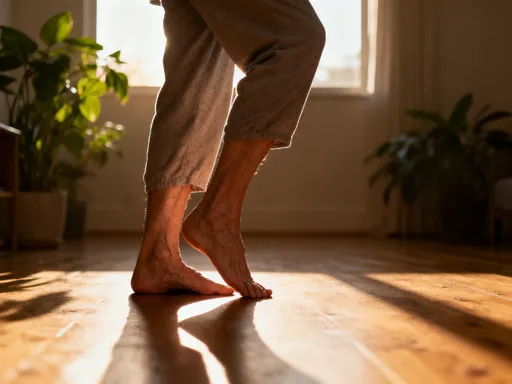
Going barefoot at home—on safe, clean surfaces like hardwood, tile, or low-pile carpet—can help reawaken these muscles. Without the barrier of shoes, your feet receive direct input from the floor, stimulating the nerves and encouraging natural movement. You may notice subtle shifts in how you stand or walk, as your body learns to adjust without artificial support. Over time, this strengthens the foot’s natural arch and improves overall stability. If barefoot walking isn’t practical, consider minimalist footwear with thin, flexible soles that allow more ground feel while still offering protection.
Walking on varied surfaces also plays a key role in balance training. Most daily walking happens on flat, predictable ground like sidewalks or office floors. But real-world environments are rarely so uniform. Walking on grass, sand, gravel, or uneven trails challenges your balance in gentle, functional ways. These surfaces require constant micro-adjustments in foot placement, ankle angle, and weight distribution—precisely the skills needed for stability in everyday life. Even brief walks in the park or on a nature trail can provide valuable sensory input.
You don’t need to hike daily to benefit. Simply varying your walking environment when possible—choosing a cobblestone path over pavement, or stepping onto a grassy area while walking through a parking lot—can make a difference. The goal is to expose your feet and balance system to different textures and levels of firmness. These small challenges train your body to adapt, improving confidence and reducing the fear of falling. Foot strength and ground awareness are not just for athletes—they’re essential components of lifelong stability.
Core Awareness: The Silent Support System
When people think of the core, they often picture visible abdominal muscles. But true core strength is not about appearance—it’s about function. The core includes deep muscles like the transversus abdominis, multifidus, pelvic floor, and diaphragm. These muscles work together to stabilize the spine, support upright posture, and coordinate movement between the upper and lower body. A strong, engaged core acts like an internal corset, providing a stable base from which limbs can move with control and precision.
Weak or underactive core muscles can lead to poor posture, reduced balance, and inefficient movement patterns. Without this internal support, the body relies more on larger, superficial muscles to maintain stability, which can lead to fatigue and strain. The result is often a swaying stance, difficulty with coordination, or a tendency to overcorrect during movement. The good news is that core strength can be improved without sit-ups or intense workouts—through subtle, consistent engagement during daily activities.
One effective method is gentle abdominal bracing. This involves lightly tightening the muscles just below the navel, as if preparing to be gently poked in the stomach. The key is to maintain normal breathing while doing so—this ensures you’re not holding your breath or over-tensing. Practice this during routine tasks like standing in line, loading the dishwasher, or walking. Over time, this habit builds neuromuscular awareness, making core engagement a natural part of movement.
Diaphragmatic breathing also supports core function. Breathing deeply into the belly, rather than shallowly into the chest, activates the diaphragm and coordinates it with the deep abdominal and pelvic floor muscles. Try placing one hand on your chest and one on your abdomen; as you inhale, let the belly rise while keeping the chest still. This type of breathing not only calms the nervous system but also strengthens the core’s natural stability. Together, these quiet practices enhance balance by creating a solid, responsive foundation for all movement.
Vision and Focus: How Your Eyes Help You Stay Steady
Your eyes play a surprisingly vital role in balance. They provide constant visual input about your surroundings—where you are in space, how close you are to objects, and whether the ground ahead is level. This information is sent to the brain, which uses it to adjust posture and movement in real time. When vision is impaired or underused—such as when staring at a screen or walking with your gaze down—your brain receives less accurate spatial data, making it harder to maintain stability.
Many people develop the habit of looking down while walking, especially when using a phone or navigating crowded spaces. This limits peripheral vision and reduces awareness of obstacles or changes in terrain. It also shifts the head forward, disrupting spinal alignment and pulling the center of gravity off balance. Similarly, spending hours focused on close-up tasks like reading or sewing can dull the eyes’ ability to shift focus between near and far distances, which is important for dynamic movement.
Improving visual habits can significantly enhance balance. Start by lifting your gaze when walking. Look ahead at eye level, scanning the environment rather than fixating on the ground. This not only improves spatial awareness but also encourages better posture by aligning the head over the spine. When walking outdoors, notice distant trees, buildings, or the horizon—this helps your brain calibrate depth and distance. Indoors, take breaks from screens to look around the room, shifting focus from near to far every 20 minutes.
Another helpful practice is reducing “visual dependency.” Some people rely too heavily on sight to maintain balance, which becomes a problem in low-light conditions or when vision is obstructed. To build resilience, occasionally close your eyes while standing (with support nearby) and notice how your body feels. This heightens awareness of other balance systems, like the inner ear and foot sensation. Over time, these small adjustments help your brain integrate multiple sources of information, leading to smoother, more confident movement in any environment.
Putting It All Together: Building a Balanced Life
Improving balance isn’t about mastering complex exercises or buying special equipment. It’s about consistency, awareness, and small, sustainable changes. The habits outlined in this article—posture correction, regular movement, mindful footwear, foot stimulation, core engagement, and visual focus—are not isolated fixes. They work together to support a single goal: a body that moves with confidence, control, and ease.
The key is to start small and build gradually. Choose one habit to focus on each week—perhaps standing with better alignment, or walking barefoot at home. As it becomes natural, add another. Over time, these behaviors become second nature, woven into the fabric of daily life. Progress may be subtle: standing on one foot while brushing your teeth without wobbling, walking on a gravel path without hesitation, or feeling steadier when turning quickly. These small wins are signs of real change.
Balance is not a skill you lose—it’s one you nurture. Like a garden, it thrives with regular attention, not occasional effort. By making mindful choices each day, you support the complex systems that keep you upright. You don’t need to be perfect. You don’t need to spend hours exercising. You simply need to move, align, and pay attention. In doing so, you invest in a future where stability is not a concern, but a quiet, reliable presence. Balance is not just about not falling—it’s about moving through life with confidence, grace, and strength.