Why Your Body Actually Recovers Better This Way
Recovery isn’t just about resting—it’s a science. After an injury, I learned that healing isn’t passive; it’s about smart movement, timing, and consistency. Through guided rehabilitation training, my strength returned not by pushing harder, but by working smarter. This is how modern recovery works: precise, progressive, and proven. Let’s explore how your body truly heals—and how to support it the right way.
The Hidden Problem: Why Simple Rest Isn’t Enough for Recovery
For decades, the standard advice after an injury was clear: rest, ice, elevate, and avoid movement. While this approach reduces immediate pain and swelling, it’s now understood that prolonged rest can do more harm than good. The human body thrives on movement, and when joints and muscles are immobilized for too long, the consequences begin almost immediately. Within days, muscle atrophy—loss of muscle mass—can set in, especially in weight-bearing areas like the legs. Connective tissues stiffen, range of motion decreases, and circulation slows, all of which delay the healing process.
The outdated belief that stillness equals healing has been replaced by a more dynamic understanding: recovery is not passive. The body needs stimulation to repair itself effectively. This is where the concept of active recovery comes in. Active recovery involves gentle, intentional movements designed to increase blood flow, reduce stiffness, and maintain neuromuscular connections without overstressing injured tissues. It’s not about pushing through pain or resuming full activity—it’s about reintroducing motion at the right time and in the right way. Movement, in this context, becomes medicine.
Research in physical therapy and sports medicine consistently shows that early mobilization—when appropriate—leads to faster and more complete recovery outcomes. For example, patients recovering from ankle sprains who begin controlled range-of-motion exercises within the first few days report less swelling and regain function more quickly than those who remain immobilized. The same principle applies to post-surgical recovery, where early walking after procedures like knee replacements significantly improves joint mobility and reduces complications. The body interprets movement as a signal that healing is needed and responds by accelerating tissue repair.
How the Body Heals: A Scientific Look at Tissue Repair
Understanding how the body repairs itself begins with recognizing the three distinct phases of healing: inflammation, repair, and remodeling. These stages are not isolated events but a continuous, overlapping process that unfolds over weeks or even months, depending on the injury. The first phase, inflammation, often misunderstood as something to suppress, is actually essential. It brings immune cells, nutrients, and growth factors to the injury site, clearing damaged tissue and preparing the area for rebuilding. Swelling and redness are not signs of failure—they are signals that the body’s repair crew has arrived.
The repair phase follows, during which the body lays down new tissue such as collagen to bridge the gap in damaged muscles, tendons, or ligaments. This new tissue is initially disorganized and weak, like a temporary patch. Over time, during the remodeling phase, the body strengthens and aligns these fibers to better withstand mechanical stress. This is where rehabilitation plays a critical role. Mechanical loading—applying controlled stress through movement—signals the body to adapt and strengthen the repair. Without this stimulus, the tissue remains weak and prone to re-injury.
Blood flow is another cornerstone of healing. Oxygen and nutrients delivered through the bloodstream fuel cellular repair, while waste products are removed. Movement enhances circulation, making it a natural booster of recovery. Additionally, proper nutrition—particularly adequate protein, vitamin C, and zinc—supports collagen synthesis and immune function. Rehabilitation programs that integrate movement, timing, and nutritional awareness align with the body’s innate biological rhythms, creating optimal conditions for recovery. When these elements work together, healing is not just possible—it’s efficient.
Rehabilitation Training vs. Regular Exercise: What’s the Difference?
It’s easy to confuse rehabilitation training with regular exercise, but they serve fundamentally different purposes. General fitness focuses on building strength, endurance, and performance. Rehabilitation, on the other hand, prioritizes restoration of function, correction of movement patterns, and protection of healing tissues. While a fitness routine might involve lifting heavy weights or high-intensity intervals, rehab training emphasizes low load, high control, and neuromuscular re-education. The goal is not to sweat or feel exhausted, but to retrain the body to move safely and efficiently.
One of the key distinctions is the principle of precision over intensity. In rehabilitation, form is everything. A simple heel slide for knee recovery or a glute bridge for lower back support may look easy, but when performed with full attention to muscle activation and joint alignment, they deliver powerful therapeutic effects. These exercises reconnect the brain to muscles that may have “shut off” after injury—a phenomenon known as neural inhibition. By re-establishing these connections, rehab helps prevent compensatory movements that can lead to chronic pain or secondary injuries.
Another critical difference is the absence of ego in rehabilitation. Unlike gym workouts where progress is measured by heavier weights or faster times, rehab progress is measured by improved control, reduced pain, and increased confidence in movement. A person might perform only a few repetitions of a single-leg balance exercise, yet this small step can be a major milestone in regaining stability. The mindset shifts from “how hard can I push?” to “how well can I move?” This subtle but powerful change protects healing tissues while building long-term resilience.
The Core Components of Effective Rehabilitation Programs
An effective rehabilitation program is not a random collection of exercises—it’s a structured plan built on three foundational components: mobility work, activation exercises, and progressive loading. Each plays a unique role in restoring function and preparing the body for everyday activities. Mobility work addresses stiffness and restricted movement by improving joint range of motion and soft tissue flexibility. This might include gentle stretching, foam rolling, or dynamic movements like ankle circles or shoulder rolls. Without adequate mobility, even the strongest muscles cannot function properly.
Activation exercises target muscles that have become underactive or “silent” after injury. For example, after a shoulder injury, the rotator cuff muscles may fail to engage during arm movements, forcing larger muscles like the deltoids to compensate. This imbalance increases strain and risk of re-injury. Activation drills—such as low-resistance external rotations with a band—help “wake up” these dormant muscles, restoring their role in joint stabilization. These exercises are typically performed with minimal resistance and high focus on quality of movement.
Progressive loading is the gradual introduction of stress to healing tissues, allowing them to adapt and grow stronger. This is not about jumping into heavy lifting but about systematically increasing demand—whether through more repetitions, longer holds, or slightly more resistance—only when the body is ready. For instance, someone recovering from Achilles tendinopathy might start with double-leg heel raises on flat ground, then progress to single-leg raises on a step, over several weeks. This staged approach ensures that tissue strength keeps pace with functional demands, reducing the risk of setbacks.
Why Timing and Progression Matter More Than You Think
One of the most overlooked aspects of recovery is timing. Healing tissues have biological limits, and exceeding these limits—even with good intentions—can set progress back by weeks. The body heals in phases, and each phase requires different types of input. In the early stages, when inflammation is still present, aggressive stretching or strength training can disrupt the repair process. Yet waiting too long to begin movement can lead to stiffness and weakness. The key is to match the type and intensity of exercise to the current healing phase.
Progression must be gradual and individualized. Two people with the same injury may heal at different rates due to age, overall health, nutrition, and adherence to rehab protocols. A one-size-fits-all approach often fails. Instead, modern rehabilitation uses staged models—such as the “load progression continuum”—that guide patients from protected motion to functional movement and finally to sport- or life-specific activities. Each stage builds on the last, ensuring that strength, stability, and confidence develop together.
Evidence from sports medicine supports this phased approach. Studies on athletes recovering from ACL reconstruction show that those who follow structured, phase-based rehab programs return to sport with lower re-injury rates and better long-term knee function. The same principles apply to everyday injuries, whether it’s a strained back or a wrist sprain. Rushing ahead because “it feels better” often leads to flare-ups and setbacks. Patience, guided by professional assessment, is not a sign of weakness—it’s a hallmark of intelligent recovery.
Common Mistakes That Slow Down Recovery (And How to Avoid Them)
Even with the best intentions, many people unknowingly sabotage their recovery. One of the most common mistakes is returning to activity too soon. Pain may have decreased, but that doesn’t mean tissues are fully healed. The remodeling phase can last months, and jumping back into full activity before the tissue is strong enough often leads to re-injury. Another frequent error is skipping foundational exercises in favor of more advanced ones. Someone might skip basic core activation drills and jump straight to planks or sit-ups, only to reinforce poor movement patterns.
Ignoring pain signals is another major pitfall. While some discomfort during rehab is normal—especially when reactivating dormant muscles—sharp or increasing pain is a warning sign. Pushing through pain can cause micro-damage that accumulates over time, delaying healing. Equally harmful is the belief that “no pain, no gain” applies to recovery. This mindset, often carried over from fitness culture, is counterproductive in rehabilitation. Healing requires listening, not overpowering.
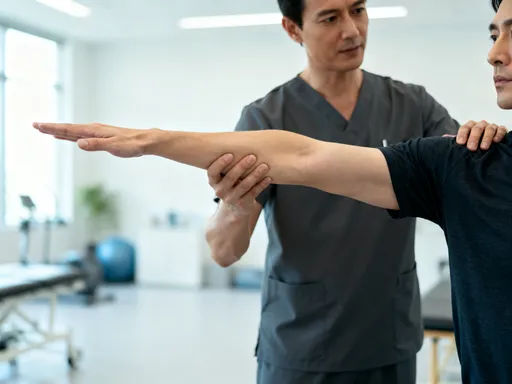
To stay on track, it’s essential to follow a consistent routine and track progress objectively. Keeping a simple journal of exercises, repetitions, and how the body responds can provide valuable insights. Working with a physical therapist or certified rehab specialist ensures that exercises are appropriate and performed correctly. They can adjust the program based on progress and prevent missteps. Recovery is not a solo journey—it’s a collaboration between the individual and their healthcare team.
Putting It All Together: Building a Smarter Recovery Mindset
True recovery is not just about fixing an injury—it’s about building a stronger, more resilient body. The shift from “getting back fast” to “returning smarter” changes everything. It means valuing patience over speed, precision over intensity, and long-term health over short-term gains. This mindset recognizes that healing is not a detour but a necessary part of a healthy, active life. Every step taken with care and intention strengthens not just the injured area, but the entire system.
Consistency is the quiet engine of recovery. Daily, small efforts—performing prescribed exercises, staying mindful of posture, nourishing the body with good food—add up over time. These habits create a foundation that supports not only recovery but prevention. A body that has gone through proper rehabilitation is often more aware, better aligned, and more capable than before the injury. Confidence returns not just in movement, but in knowing that you listened, learned, and healed wisely.
In the end, recovery is a form of self-respect. It’s a commitment to your body’s well-being, acknowledging its limits and honoring its capacity to heal. With the right approach—guided by science, supported by professionals, and carried out with patience—you don’t just recover. You emerge stronger, more resilient, and better equipped for the years ahead. That’s not just healing. That’s transformation.