Wandering Through Stone and Wind: Salalah’s Hidden Architectural Soul
Have you ever walked through a city and felt like the walls were whispering stories? That’s exactly what happened when I wandered through Salalah, Oman. Far from flashy skyscrapers, its charm lies in humble stone buildings, wind towers, and ancient frankincense-era layouts. Every alley felt like a quiet conversation with history. This isn’t just travel—it’s feeling a place through its architecture. In Salalah, the built environment doesn’t shout; it murmurs, inviting you to lean in, listen, and understand. Here, architecture is not merely shelter—it’s memory made tangible, climate wisdom carved in coral, and culture expressed in every carved door and shaded courtyard.
First Impressions: A City That Breathes Tradition
Arriving in Salalah, one is immediately struck by the absence of architectural noise. Unlike the gleaming high-rises of neighboring Gulf cities, Salalah maintains a low, earth-hugging profile. The skyline is uncluttered, the buildings modest in scale and rich in restraint. This is a city that has grown quietly, shaped more by centuries of tradition than by the urgency of modernization. The older neighborhoods—particularly Mirbat and Al-Baleed—offer a glimpse into a built environment where every design choice serves both practical and cultural purposes. Walking through these districts feels like stepping into a living archive, where homes are not preserved relics but inhabited spaces, worn gently by time and daily life.
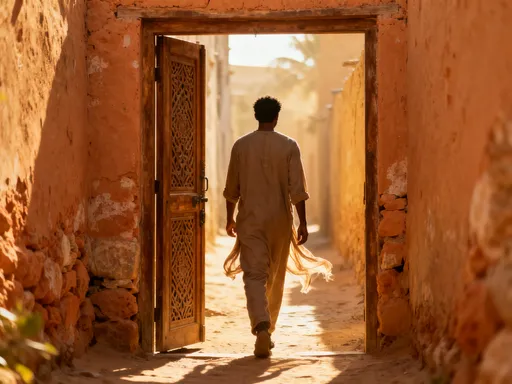
The architectural language here is deeply Omani. Thick walls made of coral stone rise from the ground like natural extensions of the landscape. These walls, often left in their raw, sun-bleached state, provide thermal mass that absorbs heat during the day and releases it slowly at night, maintaining stable indoor temperatures. Wooden doors, tall and intricately carved, punctuate the facades. Many are painted blue—a traditional practice believed to deter insects, though locals also appreciate their aesthetic contrast against the warm stone. These doors open into private worlds, often leading to inner courtyards shielded from public view, reflecting Islamic values of modesty and family privacy.
Narrow alleyways weave through the districts, deliberately designed to minimize direct sun exposure. The tight urban fabric creates shade corridors, where breezes slip through like whispers. This microclimate engineering is not accidental; it is the accumulated wisdom of generations adapting to a hot, humid coastal environment. In Mirbat, once a key port in the frankincense trade, the streets follow organic patterns shaped by wind flow and social customs rather than rigid grids. There is a rhythm to the layout—one that rewards slow exploration. Each turn reveals a new texture: a crumbling corner revealing layers of plaster, a vine spilling over a courtyard wall, or the faint scent of frankincense lingering near a shop entrance.
What makes Salalah’s architecture so compelling is its authenticity. These are not theme-park recreations or tourist-oriented facades. People live here. Children play in doorways, elders sit on low benches in shaded corners, and laundry flutters between buildings. The wear and tear on the walls—chipped paint, weathered wood, uneven stone—add to the narrative rather than detract from it. This is architecture as a continuous dialogue between past and present, where preservation does not mean freezing time but allowing tradition to evolve with dignity.
The Language of Materials: Coral, Mud, and Wood
Salalah’s buildings speak a material language rooted in local ecology and centuries-old craftsmanship. The most distinctive element is coral stone, harvested from the surrounding coastline. Centuries ago, coastal communities sustainably collected fossilized coral from shallow reefs, cutting it into blocks that were then dried and used in construction. This material, though porous, is surprisingly durable when treated with a mixture of lime and gypsum, which acts as a natural binder and protective coating. The result is a wall that breathes—allowing moisture to escape while maintaining structural integrity. This breathability is crucial in a region with high humidity, preventing mold and ensuring indoor comfort without mechanical ventilation.
In rural areas beyond the city center, mud brick construction becomes more common. These bricks, made from a mixture of clay, water, and reinforcing fibers from palm trees, are sun-dried and layered into thick walls. Often finished with a smooth plaster made from lime or gypsum, they offer excellent insulation. The use of palm fibers is not merely practical; it reflects a deep understanding of available resources. Nothing is wasted. Even the formwork for shaping bricks was traditionally made from repurposed wood or woven mats, underscoring a culture of resourcefulness.
Wood plays a critical role in both structure and ornamentation. Teak and acacia, historically imported via maritime trade routes that connected Oman to India and East Africa, were prized for their resistance to termites and decay. These hardwoods frame windows and doors, support roof beams, and form the latticework of wind towers. The craftsmanship in the woodwork is exceptional—doors often feature geometric patterns or floral motifs carved by hand, each design carrying subtle cultural meanings. Some patterns symbolize protection, others prosperity, and a few are purely aesthetic, reflecting the artisan’s personal style.
Today, traditional material use is being preserved through heritage restoration projects. Organizations like the Ministry of Heritage and Tourism have supported the rehabilitation of historic buildings in Al-Baleed and Mirbat, ensuring that original techniques are maintained. Artisans trained in traditional methods pass down their knowledge to younger generations, keeping skills like coral stone laying and hand-carved woodworking alive. In some cases, modern materials are carefully integrated—such as reinforced concrete foundations—to meet safety standards without compromising authenticity. This balance between preservation and practicality ensures that Salalah’s architectural language remains fluent, not frozen in time.
Wind Towers and Courtyards: Designing for Climate
One of the most remarkable aspects of Salalah’s traditional architecture is its passive cooling system—achieved without electricity or modern technology. Central to this are the barjeel, or wind towers, which although less widespread here than in places like Bahrain or Dubai, still exist in some older homes. These slender towers, often positioned at the corner of a building, are designed to catch prevailing sea breezes. Their openings face the wind, funneling cool air down into the interior spaces. As warm air rises and escapes through opposite vents, a natural convection current is created, continuously refreshing the indoor environment.
Stepping into a courtyard house in Mirbat is an immediate sensory shift. The temperature drops noticeably, the light softens, and the noise of the street fades. The courtyard—typically square or rectangular—acts as the heart of the home. It is open to the sky but surrounded by covered walkways on one or more sides, providing shaded circulation space. In the center, a small fountain or planter with date palms adds humidity and visual calm. This design is not merely aesthetic; it is a climate-responsive solution perfected over centuries. The high walls block direct sunlight, while the open center allows hot air to escape, drawing in cooler air from below.
Courtyards also serve social and familial functions. They are private realms where women could gather, children could play, and meals could be served in the evening breeze. In traditional Omani homes, the courtyard often separates public and private zones—guest rooms facing the front, family quarters to the rear. This spatial hierarchy reinforces cultural norms around hospitality and privacy. Even today, many families maintain this layout, adapting it to modern lifestyles by incorporating glass doors or retractable shades while preserving the core design.
What is most impressive is how these ancient techniques are now informing contemporary sustainable architecture. Architects around the world are studying Omani wind towers and courtyard systems as models for energy-efficient design. In an era of climate crisis, Salalah’s built environment offers a quiet lesson: comfort does not require consumption. By working with, rather than against, natural forces, these homes achieve thermal comfort using only wind, shade, and intelligent massing. This is not nostalgia—it is forward-thinking design rooted in timeless principles.
The Frankincense Trail’s Legacy in Urban Layout
Salalah’s urban form cannot be fully understood without acknowledging its role as a historic hub of the frankincense trade. For over a thousand years, this region—known in antiquity as Dhofar—produced the finest frankincense resin, sought after across the ancient world for religious rituals, medicine, and perfumery. The wealth generated by this trade shaped the city’s development, influencing everything from street patterns to building density. Today, remnants of this legacy are still visible in the layout of the old souq and surrounding merchant quarters.
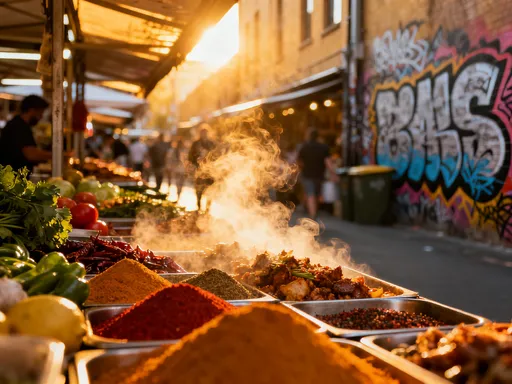
The souq’s pathways are narrow and often covered, designed to protect traders and goods from the sun. These covered walkways, supported by stone columns or wooden beams, create a network of shaded corridors where merchants once displayed frankincense, myrrh, and spices. The proximity of shops reflects the social and economic clustering common in traditional marketplaces—spice sellers near each other, metalworkers in another zone, textile vendors in a third. This organic zoning, developed over centuries, enhances foot traffic and fosters community among artisans and traders.
Merchant houses in Al-Baleed were built close together, often sharing walls to reduce heat gain and maximize land use. Many featured concealed storage rooms, sometimes underground, where valuable frankincense resin was kept secure. These homes were not just residences but commercial centers, with courtyards serving as workspaces for sorting and packaging resin. The architecture reflected status—wealthier merchants could afford larger courtyards, more elaborate woodwork, and even small watchtowers for security.
At the Al-Baleed Archaeological Park, visitors can see reconstructed buildings based on excavation findings, offering a tangible sense of how the city looked during its trading heyday. The site includes a restored fort, a mosque, and a merchant’s house, all built using traditional materials and techniques. Interpretive panels explain the function of each space, helping visitors connect the physical remains with their historical context. Even outside the park, some alleys retain a commercial rhythm—small shops still sell frankincense in various grades, hand-rolled into cones or stored in wooden boxes. The scent lingers in the air, a sensory echo of the past.
Mosques: Simplicity Meets Spiritual Elegance
In contrast to the opulent mosques found in some Gulf cities, those in Salalah embody a quiet elegance rooted in the principles of Ibadhi Islam, the dominant branch in Oman. This tradition emphasizes humility, moderation, and simplicity in both worship and architecture. As a result, Omani mosques avoid excessive ornamentation, towering domes, or gold-plated details. Instead, they focus on proportion, symmetry, and the quality of light and space.
The Sultan Qaboos Grand Mosque in Salalah is a prime example. While spacious and well-maintained, it does not overwhelm. Its dome is modest in scale, its minaret slender and unadorned. The exterior is largely whitewashed, with arched windows and minimal decorative tilework. Inside, the prayer hall is vast but serene, with natural light filtering through small, high-set windows. The floor is covered in soft carpet, and the mihrab (prayer niche) is subtly highlighted with blue and white mosaic tiles. There is no gilding, no chandeliers—only a space designed for contemplation and connection.
The courtyard of the mosque is another example of functional beauty. Lined with shaded arcades, it provides a cool gathering space before and after prayers. A central fountain offers both aesthetic calm and practical utility, its sound masking street noise and its water used for ritual ablutions. Date palms and low shrubs add greenery without obstructing views. This integration of nature and architecture enhances the spiritual atmosphere, creating a sanctuary within the city.
Smaller neighborhood mosques follow the same principles. Often single-room structures with flat roofs and simple minarets, they blend seamlessly into the urban fabric. Their unassuming presence reflects a cultural value: that faith should be lived quietly, not performed for show. For visitors, these spaces offer a chance to observe daily religious life with respect and distance. While non-Muslims are generally not permitted inside, the exteriors alone convey a powerful message about the relationship between belief and built form.
Modern Shifts: Balancing Growth and Heritage
As Salalah grows, new residential and commercial developments are reshaping parts of the city. Concrete apartment blocks, glass-fronted shops, and wide asphalt roads now define the newer districts. These changes reflect rising population, increased tourism, and economic development. Yet, unlike in many rapidly urbanizing cities, Salalah has implemented architectural guidelines to ensure that modern construction does not erase its cultural identity.
Government regulations require new buildings to incorporate traditional design elements. This includes arched windows, neutral earth-toned façades, textured wall finishes, and rooflines that echo historic forms. The goal is not to replicate the past but to create a visual continuity between old and new. As a result, walking from the historic center to the modern outskirts feels like a gradual transition rather than a jarring contrast. A shopping mall might have a glass façade, but its entrance is framed by stone columns and a recessed arch. An apartment complex may use modern materials, but its balconies are screened with latticework inspired by traditional mashrabiya.
This approach, sometimes referred to as the “Omani identity code,” has drawn both praise and criticism. Supporters argue that it preserves the city’s character and prevents the homogenization seen in other Gulf urban centers. Critics, however, suggest that some implementations are superficial—that the traditional elements are applied as decorative veneers without understanding their original functional purpose. While there is truth in this concern, the policy remains a necessary compromise. Complete architectural freedom could lead to visual chaos; strict复古ism would stifle growth. The current model, though imperfect, strikes a balance that honors heritage while allowing progress.
Moreover, some newer projects are beginning to integrate traditional principles more deeply. A few eco-lodges and cultural centers use passive cooling techniques, courtyards, and local materials in innovative ways. These buildings demonstrate that tradition and modernity need not be opposites—they can inform and enrich each other. As Salalah continues to evolve, the challenge will be to deepen this integration, ensuring that new architecture does not just look Omani but behaves like it—responding to climate, culture, and community.
Wandering with Purpose: How to Experience Salalah’s Architecture
To truly appreciate Salalah’s architectural soul, one must move slowly and observe closely. This is not a city for checklist tourism. Its beauty lies in details—the grain of carved wood, the texture of coral stone, the way light shifts across a courtyard wall over the course of an hour. A thoughtful itinerary can transform a casual visit into a meaningful encounter with place.
Begin at the old souq, arriving early in the morning when the light is soft and the air is cool. Walk through the covered market lanes, noticing how the structure provides shade and how vendors arrange their goods to catch breezes. From there, head to Mirbat, about 40 kilometers west. This historic port town offers some of the best-preserved traditional architecture in the region. Wander its alleys, pause at doorways, and photograph the interplay of shadow and form. If possible, arrange for a local guide—someone who can explain the meaning behind architectural details, such as why certain doors are painted blue or how wind towers were oriented to catch specific winds.
Next, visit the Al-Baleed Archaeological Park, where history and interpretation come together. Spend time in the reconstructed buildings, imagining daily life centuries ago. Then, explore nearby rural villages like Al Fazayah or Taqa, where traditional houses still stand alongside modern ones. These villages offer a living laboratory of architectural adaptation, where families maintain old techniques while incorporating new needs.
Timing enhances the experience. Early morning light accentuates textures, making stone and wood appear more vivid. Late afternoon, when the sun is low, casts long shadows that emphasize the depth of arches and the rhythm of façades. Bring a camera, but also allow time to simply sit and observe. Focus on patterns—on door knockers shaped like hands, on the geometry of latticework, on the way roof beams align with the sun’s path. These are the quiet signatures of a built environment that has learned, over centuries, how to live wisely with its land.
Conclusion: Where Stones Remember
Salalah’s architecture is not defined by grand monuments or iconic landmarks. Its power lies in the cumulative effect of small, deliberate choices—thick walls that cool the air, courtyards that gather families, wind towers that harness the breeze. This is a built environment shaped by necessity, refined by culture, and sustained by memory. In a world increasingly dominated by glass towers and disposable design, Salalah offers a different vision—one where buildings are not just structures but stewards of tradition and climate wisdom.
Wandering through its alleys, one begins to understand that architecture can be a form of storytelling. The stones remember. They recall the footsteps of frankincense traders, the laughter of children in courtyards, the quiet prayers in simple mosques. They speak of a way of life that values balance—between indoor and outdoor, public and private, past and present. To walk through Salalah is not just to see a city but to feel its rhythm, to become part of its ongoing story.
For the thoughtful traveler, especially those who appreciate heritage, craftsmanship, and sustainable living, Salalah is a quiet revelation. It does not dazzle; it deepens. And in that depth, there is a kind of beauty that lingers long after the journey ends—a reminder that the most enduring designs are not those that reach for the sky, but those that grow gently from the earth, shaped by time, wind, and the hands of those who call it home.