Winding Roads and Storybook Charm: My Self-Drive Escape to Odense
You know what’s seriously underrated? Cruising through quiet Danish countryside with no GPS drama, just open road and the promise of something authentically magical. I drove into Odense expecting a quick stop, but what I found—cozy lanes, unexpected art, and moments of pure stillness—completely blew me away. This isn’t just about getting from A to B; it’s how the journey amplifies every view, every feeling. Let me take you through why seeing Odense by car changed everything.
The Decision to Go Self-Drive: Why a Car Was My Best Travel Move
For years, I relied on trains and buses when traveling through Europe. There’s comfort in letting someone else handle the wheel while you sip coffee and watch the world glide by. But something shifted on my last trip to Denmark. I was planning a visit to Odense—mainly to see the H.C. Andersen House—but I wanted more than a checklist of tourist sites. I craved the kind of moments that don’t fit neatly into timetables: a sudden detour to a lakeside bench, an unplanned stop at a roadside apple stand, or lingering in a village square until the golden hour painted the buildings in warm light. That’s when I realized public transport wouldn’t give me the freedom I truly wanted. Renting a car wasn’t just a convenience; it was a decision to reclaim control over my pace and path.
Driving in Denmark turned out to be one of the smoothest travel experiences I’ve had. The roads are well-maintained, clearly marked, and surprisingly uncrowded, especially outside major cities. Signage is in both Danish and English, and roundabouts—while frequent—are intuitive once you get the rhythm. What stood out most was how much more I could access. Odense itself is walkable and charming, but the real magic began to unfold just beyond its borders. Without a car, I would have missed the quiet forest clearings near Nørre Lyndelse, the sun-dappled trails of Egens Forest, or the tucked-away bakery in Kerteminde that served the flakiest rye bread I’ve ever tasted. These weren’t on any tour itinerary, but they became some of the most memorable parts of my journey.
Equally important was the comfort of having my own space. Traveling as a woman in my early 40s, I appreciated being able to store my luggage securely, carry a reusable water bottle and snacks, and take breaks whenever I needed. No rushing to catch a train, no lugging bags through stations. The car became a quiet sanctuary—my own moving retreat where I could listen to Danish folk music, pause for a picnic, or simply sit and breathe between destinations. That sense of autonomy made the trip feel deeply personal, not just another vacation checked off a list.
On the Road: First Impressions of Denmark’s Southern Landscape
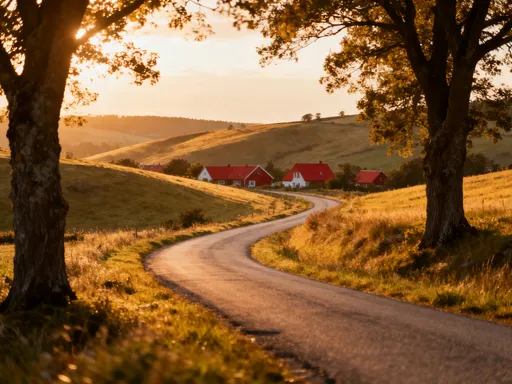
The drive from Copenhagen to Odense covers about 160 kilometers, but it felt like crossing into a different world. As the city skyline faded behind me, the landscape softened into a patchwork of green and gold—rolling farmland stitched together by hedgerows and dotted with grazing cows. The sun rose as I passed small villages with red-tiled roofs and white-trimmed windows, each looking like it had stepped out of a storybook. Windmills stood like sentinels on low hills, their blades turning slowly in the morning breeze. There was a quiet rhythm to the drive, a sense of ease that I hadn’t expected.
What struck me most was how self-driving allowed me to absorb the subtle shifts in scenery. On a train, you see a blur of countryside between stops. In a car, you notice the details: the way light changes over a field of rapeseed, the sudden appearance of a wildflower meadow beside the road, or the sound of birdsong when you pause at a rest area. I took a short detour near Tommerup, following a local sign to a walking path along a stream. It added only twenty minutes to my trip, but that quiet stretch—where I saw kingfishers darting over the water and an elderly couple fishing from the bank—stayed with me longer than any landmark.
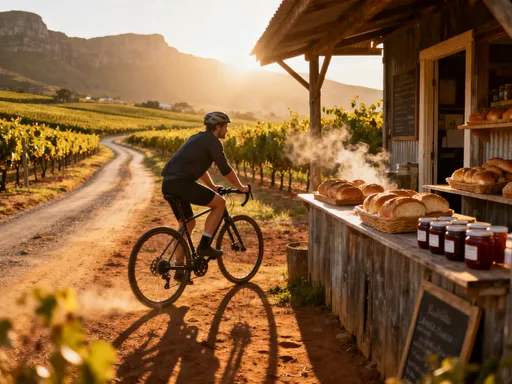
The southern region of Funen, where Odense is located, has a distinct character. It’s greener, gentler, and somehow more intimate than other parts of Denmark. The villages aren’t just picturesque; they feel lived-in and welcoming. I passed roadside stands selling honey, fresh eggs, and handmade jams, often with an honor box for payment. There’s a trust here, a simplicity that feels rare in today’s fast-paced world. Driving gave me the chance to move at a pace that matched the landscape—slow enough to notice, fast enough to cover ground when I wanted to. It was the perfect balance between adventure and calm.
Arrival in Odense: A City That Feels Both Historic and Alive
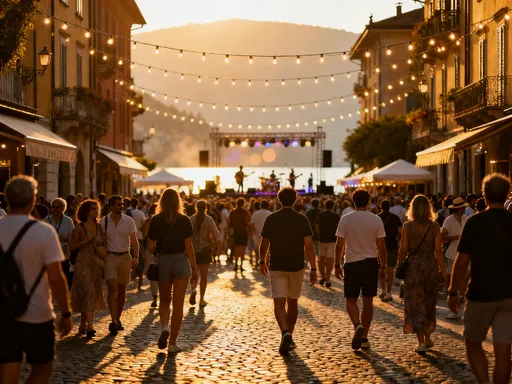
When I finally arrived in Odense, I was struck by how effortlessly the city blends history with modern life. I parked just a ten-minute walk from the Old Town at a public garage near the train station—clearly marked and reasonably priced. From there, I walked into a world of cobblestone streets, half-timbered houses in soft pastels, and flower boxes overflowing with geraniums. It’s easy to see why Odense is often called Denmark’s most charming city. But beyond its fairy-tale appearance, there’s a vibrant energy here. Cafés spill onto sidewalks, children ride bicycles with streamers on the handles, and street musicians play folk tunes near the cathedral.
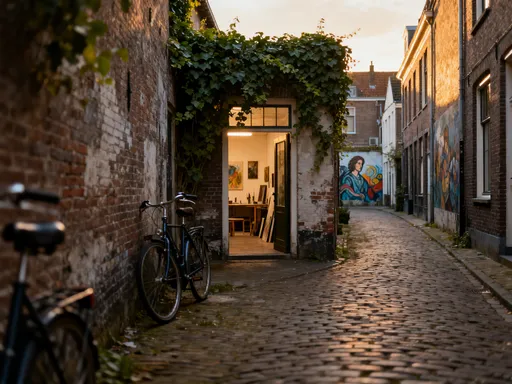
While H.C. Andersen’s childhood home draws many visitors, I found myself equally drawn to the quieter corners—the narrow alleyways where ivy climbs stone walls, the hidden courtyards with benches and bird feeders, and the small art galleries tucked into converted homes. One afternoon, I stumbled upon an open-air exhibition of ceramic sculptures in a community garden. It wasn’t advertised in any guidebook, but a hand-painted sign by the road caught my eye. That’s the beauty of having a car: you can follow your curiosity without worrying about missing a bus or walking too far in the wrong direction.
What surprised me most was how walkable the city center is, yet how much more I could explore because I had a car. I spent mornings wandering the museums and cafés, then drove out in the afternoons to nearby nature reserves or coastal spots. The contrast was refreshing—immersed in urban charm one moment, surrounded by silence and trees the next. Odense doesn’t feel like a destination you rush through. It invites you to linger, to discover its layers, and to return to the same spot at different times of day to see how the light changes. With a car, I could do exactly that—come back to the same lakeside path at dusk, or revisit a village market on a different day to try something new.
Chasing Light: The Best Viewing Spots Around Odense (And How Driving Got Me There)
One of the greatest gifts of self-driving is the ability to chase the light. In photography and in spirit, golden hour transforms ordinary places into something extraordinary. Without a car, I would have missed some of the most breathtaking moments of my trip. One evening, I drove to the edge of Vestskoven, a forested area just west of the city. I’d read about a clearing where the sunset paints the tree trunks in amber and rose. It wasn’t easy to reach by public transport, but with my car, I simply followed a narrow road until I saw the opening in the trees.
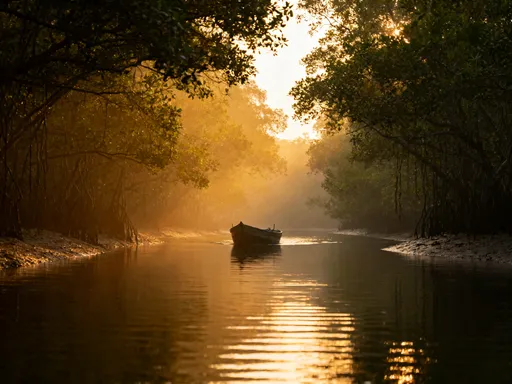
As the sun dipped below the horizon, the entire forest seemed to glow. The air was still, and the only sound was the rustle of leaves and the distant call of a tawny owl. I sat on the hood of my car, wrapped in a light jacket, watching the colors deepen. It was one of those rare, wordless moments when everything feels aligned. No crowds, no schedules—just me and the landscape, sharing a quiet farewell to the day. These kinds of experiences aren’t just about scenery; they’re about presence. Driving allowed me to be there at exactly the right time, to witness something fleeting and beautiful.
Another favorite spot was the rolling hills near Dalum, just a short drive from the city. From the highest point, you can see for miles—patchwork fields, scattered farms, and the occasional church spire rising above the trees. I visited at dawn, when the fields were covered in mist and the first light turned the sky pale pink. I brought a thermos of coffee and a notebook, and spent an hour simply sitting and writing. It wasn’t on any itinerary, but it became one of the most meaningful parts of my journey. The car didn’t just get me there; it gave me the space to stay, to reflect, to absorb.
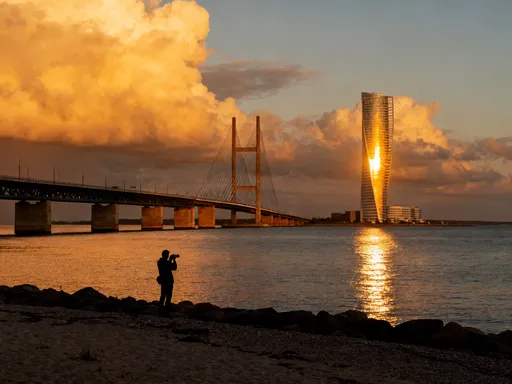
Along the Bay of Odense, I discovered several quiet pull-offs where you can park and walk down to the water’s edge. One, near Seden Strand, had a wooden bench facing the bay, perfectly positioned for watching the sunrise. I returned twice—once with a local friend I’d met at a café, and once alone. Both times, the stillness was profound. The water shimmered, ducks glided by, and the world felt hushed. These spots aren’t grand or famous, but they’re deeply peaceful. And they’re only truly accessible by car, especially if you want to arrive early or stay late without worrying about transportation.
Beyond the Guidebook: Discovering Hidden Local Gems
Some of the most authentic moments of my trip came from unplanned detours. One morning, I saw a small sign for a farmers’ market in a village near Lunderskov. It wasn’t listed in any app, but I decided to follow it. What I found was a modest gathering in a schoolyard—just a dozen vendors selling fresh vegetables, homemade cheeses, and preserves. An elderly woman handed me a sample of cloud berry jam with a smile, and we chatted in broken English and gestures. I bought a jar and a loaf of sourdough bread, then sat on a bench nearby to enjoy them. It cost less than ten euros, but the memory is priceless.
Another day, I spotted a hand-painted sign for a ceramic studio in a converted red barn. Curious, I turned down a gravel road and found myself in a peaceful workshop surrounded by fields. The artist, a woman in her fifties named Mette, welcomed me in and showed me her pieces—each one inspired by the colors and textures of the Danish coast. I watched her throw a pot on the wheel, her hands moving with quiet confidence. I ended up buying a small bowl glazed in soft blue, a quiet reminder of that afternoon. Without a car, I would have missed this entirely. There’s no bus route to that barn, and it’s too far to walk from the nearest town.
On the outskirts of Odense, I discovered a coastal path that loops around a quiet inlet. It’s not well-marked, but a local cyclist pointed me in the right direction. The drive took me through farmland and then along a narrow lane flanked by wild roses. At the end, I parked and walked the path, which offered sweeping views of the water and the chance to spot herons and kingfishers. I saw only two other people the entire time. These kinds of places don’t make it into guidebooks, but they’re where travel becomes personal. They’re the moments when you feel truly present, connected to a place not as a tourist, but as a quiet observer.
Practical Tips for a Smooth Self-Drive Experience in Denmark
If you’re considering a self-drive trip to Odense, here are some practical insights that made my journey smoother. First, renting a car is easy. Major agencies like Sixt, Europcar, and Avis have desks at Copenhagen Airport and in Odense itself. I recommend booking in advance, especially during summer, to secure better rates. Compact cars are ideal—fuel-efficient and easy to park. I chose a hybrid model, which helped keep fuel costs down, especially on longer drives.
Fuel prices in Denmark are higher than in many countries—around 16-18 DKK per liter—but the roads are efficient, so you won’t burn through gas quickly. Many stations are automated, but payment is straightforward with a credit card. I kept a small amount of cash just in case, though I never needed it. For navigation, I used Google Maps with offline maps downloaded. It worked perfectly, even in rural areas. Waze is also popular for real-time traffic updates, though I found Danish roads so smooth that delays were rare.
Understanding local driving rules made a big difference. Speed limits are strictly enforced—50 km/h in cities, 80 km/h on rural roads, and 130 km/h on motorways. Roundabouts are common, and the rule is simple: yield to traffic coming from the right unless otherwise marked. Seat belts are mandatory, and using a phone while driving is illegal unless hands-free. Parking in Odense is well-organized. The city has several multi-story garages and marked street zones. I used the Park&Go system, which lets you pay via app or machine. Rates vary, but most central areas charge around 20-30 DKK per hour. I avoided fines by checking signs carefully and using the app to extend my time remotely.
For eco-conscious travelers, Denmark is ahead of the curve. Electric vehicle charging stations are increasingly common, including in Odense. I saw several at parking garages and shopping centers. Even if you’re not driving an EV, consider choosing a fuel-efficient car to reduce your footprint. And remember: many of the best spots—like forest trails and coastal paths—are best enjoyed on foot. The car gets you there, but the real discovery happens when you step out and walk.
Why the Journey Matters as Much as the Destination
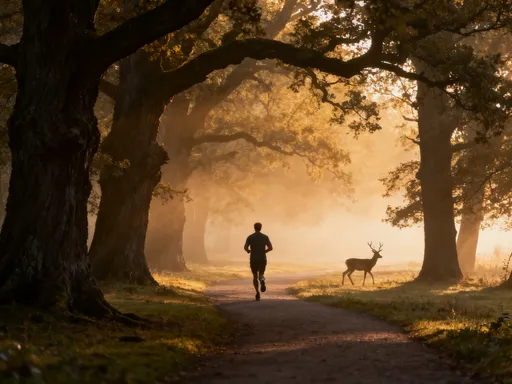
Looking back, I realize that seeing Odense through the windshield wasn’t just a way to get around—it was a way of seeing. The drive shaped my experience as much as the city itself. It taught me to slow down, to notice the curve of a country lane, the way sunlight filters through beech trees, or the sudden appearance of a deer at the forest’s edge. These aren’t moments you can plan, but they’re the ones that stay with you.
There’s a quiet joy in self-reliance, in knowing you can follow a hunch or change your mind mid-journey. I didn’t just visit Odense—I lived in it, in my own rhythm. I had breakfast in a city café, drove to a forest for a midday walk, and ended the day watching the sunset from a quiet bay. That flexibility, that sense of ownership over my time, made the trip feel deeply nourishing.
Travel isn’t just about ticking off landmarks. It’s about connection—between you and a place, between movement and stillness, between planning and spontaneity. Driving gave me the space to experience all of it. It reminded me that the road itself is part of the story, not just a passage to the next chapter. So if you’re planning a trip to Odense, consider taking the wheel. Let the open road lead you not just to a destination, but to a different way of traveling—one where every turn holds the promise of something quietly magical.