You Won’t Believe These Mind-Blowing Structures in the Canary Islands
If you think the Canary Islands are just beaches and sunshine, think again. I was totally unprepared for the jaw-dropping architecture hidden across these volcanic islands. From surreal concrete curves to bold modern designs merging with nature, every corner tells a story. This isn’t just sightseeing—it’s like stepping into an artistic dreamscape begging to be captured on camera. Trust me, your Instagram feed will thank you.
Beyond Beaches: Discovering the Canary Islands’ Architectural Soul
The Canary Islands are often celebrated for their golden sands, year-round warmth, and crystal-clear waters, drawing millions of sun-seeking visitors annually. While the beaches are undeniably inviting, they represent only a fraction of what these Atlantic archipelagos offer. Beyond the resorts and coastal promenades lies a rich architectural tapestry shaped by volcanic geology, microclimates, and centuries of cultural exchange between Europe, Africa, and the Americas. The islands’ isolation has fostered a unique design evolution—one where survival, sustainability, and artistic vision converge into striking built environments.
Unlike mainland European cities with their classical facades and historic districts, the Canary Islands showcase a more organic and experimental architectural language. Buildings here respond directly to their environment—curved walls deflect trade winds, thick volcanic stone insulates against heat, and open courtyards channel cooling breezes. These practical adaptations have evolved into a distinct aesthetic, one that values harmony with nature over rigid symmetry or ornamental excess. Architects and artists have embraced the islands’ dramatic landscapes not as obstacles, but as collaborators in design.
What makes this architectural journey particularly compelling is its diversity. Each island has developed its own architectural identity, influenced by local terrain and historical context. Tenerife’s bold contemporary landmarks contrast with Lanzarote’s art-integrated structures, while Gran Canaria blends traditional Canarian elements with futuristic innovation. Even smaller islands like Fuerteventura and La Gomera reflect minimalist sensibilities born from their austere climates. This variety transforms the archipelago into an open-air museum of visionary design, where every structure tells a story of adaptation, creativity, and reverence for the natural world.
Tenerife’s Modern Marvels: Where Nature Meets Design
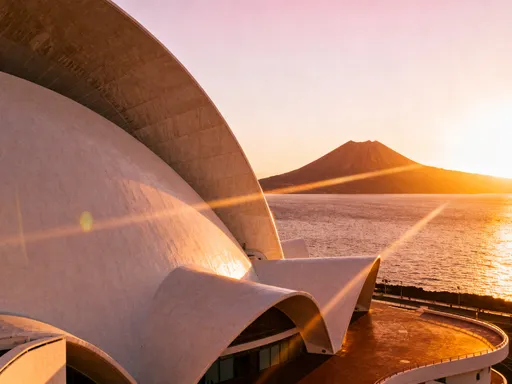
Tenerife, the largest of the Canary Islands, is home to some of the most iconic modern structures in the archipelago, none more famous than the Auditorio de Tenerife Adán Martín. Designed by internationally renowned architect Santiago Calatrava and completed in 2003, the concert hall stands at the edge of Santa Cruz’s harbor, its sweeping white roof resembling a breaking wave frozen in motion. The building’s fluid form echoes the movement of the ocean, creating a powerful visual dialogue between architecture and sea. At sunset, when the sky turns amber and the structure glows against the water, it becomes a magnet for photographers and dreamers alike.
The Auditorio is more than a visual spectacle—it’s a functional masterpiece. Its acoustics are engineered to perfection, hosting performances by world-class orchestras and cultural events throughout the year. But beyond its technical excellence, the building symbolizes a shift in how public architecture can elevate a city’s identity. Visitors are encouraged to walk around the exterior, experiencing how light and shadow play across its curved surfaces throughout the day. For the best photographs, early morning or late afternoon offers soft, golden lighting that accentuates the building’s sculptural qualities without harsh contrasts.
Yet the Auditorio is just one highlight in Tenerife’s growing collection of contemporary design. The TEA Tenerife Espacio de las Artes in Santa Cruz blends concrete, glass, and open plazas in a way that invites exploration. Its geometric forms and rooftop terraces provide panoramic views of the city and Mount Teide, the island’s towering volcano. Similarly, the Santa Cruz Maritime Promenade integrates sleek walkways, lighting installations, and rest areas that merge urban functionality with aesthetic elegance. These spaces are not isolated monuments but part of a broader vision to make art and architecture accessible to all.
For travelers planning to explore Tenerife’s architectural gems, timing and perspective matter. Arriving at the Auditorio just before sunrise allows for unobstructed shots with minimal crowds. A wide-angle lens captures the full sweep of its roofline, while a telephoto lens can isolate dramatic details like the steel ribs supporting the canopy. Drone photography is permitted in certain areas with prior authorization, offering breathtaking aerial views of how these structures sit within the coastal landscape. Most importantly, take time to experience the spaces beyond the lens—sit on a bench, listen to the wind, and feel how design shapes human emotion.
Lanzarote’s Volcanic Vision: César Manrique’s Living Legacy
If any single figure has defined the architectural soul of the Canary Islands, it is César Manrique. A native of Lanzarote and a trained artist, Manrique was deeply moved by the island’s volcanic landscape, seeing beauty in what others considered barren. In the 1960s, he returned after years abroad and dedicated his life to proving that modern development could coexist with environmental preservation. His philosophy—“art in nature, nature in art”—became the foundation of Lanzarote’s architectural identity and continues to influence building practices across the islands.
One of his most celebrated works is Jameos del Agua, a cultural center carved directly into a volcanic tunnel formed by the island’s ancient eruptions. Manrique transformed this lava tube into a surreal yet harmonious space, incorporating a natural lake inhabited by blind white crabs, an auditorium, and a restaurant—all illuminated by carefully placed skylights that filter sunlight like stained glass. The experience of walking through Jameos del Agua feels otherworldly, as if stepping into a cave crafted by both nature and human imagination. Every curve, every opening, every reflection in the water was meticulously planned to enhance, not overpower, the existing geology.
Another masterpiece is Mirador del Río, a cliffside viewpoint perched 400 meters above the sea on the northern tip of Lanzarote. Built into the rock, the structure frames the volcanic islet of La Graciosa with a clean, circular window that acts like a living painting. The minimalist design ensures that the landscape remains the true star, while the architecture provides comfort, safety, and contemplative space. Inside, curved walls and integrated seating create a seamless transition between interior and exterior, reinforcing Manrique’s belief that buildings should serve as mediators between people and nature.
Equally personal is Jardín de Cactus, Manrique’s final project and former home. Once a volcanic quarry, the site was transformed into a lush cactus garden surrounded by whitewashed walls and traditional Canarian architecture. The contrast between the arid plants and the vibrant blue sky creates a striking visual rhythm, while the central patio hosts cultural events and music performances. Today, the site operates as a museum, preserving Manrique’s legacy and offering insight into his design principles. His former residence, now open to visitors, reveals how he lived in harmony with his creations—simple, elegant, and deeply connected to the land.
Manrique’s influence extends beyond individual sites. He successfully lobbied to ban high-rise hotels and unchecked development on Lanzarote, ensuring that the island’s skyline remains low and integrated with the terrain. His vision led to the creation of protected natural parks and design guidelines that prioritize local materials, earth-toned colors, and organic forms. As a result, Lanzarote stands as a model of sustainable tourism, where architecture enhances rather than exploits the environment. For visitors, following the César Manrique Route—a curated trail connecting his major works—offers a profound understanding of how art, ecology, and design can unite to create lasting beauty.
Gran Canaria’s Hidden Gems: From Desert Domes to Mountain Retreats
While often overshadowed by Tenerife and Lanzarote, Gran Canaria harbors a surprising array of architectural wonders that reflect its diverse topography. The island transitions from desert-like dunes in the south to lush pine forests and rugged peaks in the interior, and its buildings mirror this variety. One of the most visually captivating developments is the cluster of eco-domes in the Maspalomas area, where futuristic geodesic structures blend into the sand dunes like alien habitats. Made from sustainable materials and designed for energy efficiency, these domes offer panoramic views and a unique lodging experience that feels both modern and primal.
These domes are part of a growing movement toward eco-tourism and low-impact design. Their spherical shape minimizes wind resistance, while thick insulation maintains comfortable temperatures despite the region’s intense sun. Large glass panels allow for stargazing from bed, creating a direct connection between inhabitants and the night sky. Photographers are drawn to their reflective surfaces, which capture shifting light throughout the day—from soft morning hues to fiery desert sunsets. Staying overnight in one of these domes offers more than comfort; it’s an immersive architectural experience that challenges conventional ideas of home.
In the mountainous interior, traditional Canarian architecture takes on new life through thoughtful modernization. Whitewashed houses with wooden balconies and red-tiled roofs dot the hillsides of villages like Tejeda and Artenara. These structures, originally built for thermal regulation and protection from the elements, are now being restored with contemporary interiors while preserving their historic exteriors. Some have been converted into boutique guesthouses, where guests can enjoy modern amenities without sacrificing authenticity. The use of local stone, volcanic rock, and handcrafted woodwork ensures that these renovations remain in dialogue with the island’s heritage.
One standout example is a private retreat near the Tamadaba Natural Park, where a modern villa was constructed using rammed earth techniques and solar panels. The home’s angular design follows the slope of the land, minimizing visual disruption while maximizing views of the valley below. Floor-to-ceiling windows blur the boundary between inside and outside, inviting the landscape into daily life. Such projects demonstrate how innovation can honor tradition, creating spaces that are both functional and poetic. For travelers seeking off-the-beaten-path experiences, exploring Gran Canaria’s architectural contrasts—from desert domes to mountain sanctuaries—offers a deeper appreciation of the island’s creative spirit.
Fuerteventura and Beyond: Minimalism Born from Wind and Sand
Fuerteventura, known for its endless beaches and strong Atlantic winds, has cultivated an architectural style defined by simplicity, resilience, and understated elegance. With limited vegetation and a harsh climate, builders have long favored low-profile structures that withstand erosion and extreme weather. This necessity has evolved into a refined aesthetic of minimalism, where form follows function with quiet confidence. Buildings here are often single-story, with flat roofs, smooth white walls, and narrow windows that reduce heat gain and protect against sandstorms.
One of the most striking examples is a series of coastal villas near Corralejo, designed to blend into the dunes rather than dominate them. These homes use natural pigments to match the sand, and their irregular shapes echo the undulating landscape. Rooftop terraces and shaded courtyards provide outdoor living spaces that take advantage of cooling breezes, while solar panels and rainwater harvesting systems support sustainable living. From a distance, the structures appear almost camouflaged, emerging subtly from the terrain like natural formations.
This philosophy extends to public and cultural spaces as well. The Ethnographic Museum of Antigua, housed in a restored 19th-century estate, combines traditional Canarian architecture with modern exhibition design. Thick stone walls keep interiors cool, while open-air galleries allow visitors to move seamlessly between indoor and outdoor displays. The museum tells the story of Fuerteventura’s rural heritage through artifacts, textiles, and agricultural tools, all presented in a setting that honors the island’s past without romanticizing it.
For photographers, Fuerteventura offers a unique challenge: capturing beauty in restraint. Unlike the bold curves of Tenerife or the artistic drama of Lanzarote, Fuerteventura’s architecture speaks in whispers. The interplay of light and shadow on a blank wall, the silhouette of a lone house against a vast sky, or the texture of wind-worn stone can become powerful subjects. The best images often come during the golden hour, when the low sun casts long shadows and warms the pale surfaces. A polarizing filter helps manage glare from reflective walls, while a drone (used within legal limits) reveals how these structures nestle into the landscape like pieces of a larger puzzle.
Practical Magic: How to Capture the Architecture Like a Pro
Experiencing the Canary Islands’ architecture is rewarding, but capturing it well requires planning and respect. The first rule is timing. The golden hours—shortly after sunrise and before sunset—provide soft, warm light that enhances textures and minimizes harsh contrasts. Midday sun, especially in the southern islands, can create overexposed highlights and deep shadows that obscure architectural details. Overcast days, often dismissed by tourists, can actually be ideal for photographing complex structures, as diffused light reveals subtle contours without glare.
Lens choice matters. A wide-angle lens (16–35mm) is essential for capturing the full scale of large buildings like the Auditorio de Tenerife or Mirador del Río. It allows you to include context—sky, sea, or surrounding terrain—without losing the structure’s impact. For details like textured walls, sculptural elements, or interior patterns, a 50mm prime or macro lens brings out fine craftsmanship. A telephoto lens (70–200mm) helps isolate compositions, such as the curve of a roof against a cloud-filled sky or a distant villa nestled in the hills.
Drone photography has become increasingly popular, offering stunning aerial perspectives of how buildings interact with their environment. However, regulations vary by island and location. In national parks, nature reserves, and near airports, drone use is restricted or prohibited without a permit. Always check local rules through official tourism websites or visitor centers before flying. When permitted, fly early in the morning to avoid crowds and strong winds, and maintain a safe distance from wildlife and private property.
Respect is paramount. Many architectural sites are private homes, cultural centers, or protected areas. Always follow posted signs, stay on designated paths, and avoid trespassing. At places like César Manrique’s former home or eco-domes in residential zones, maintain a low profile and ask permission if photographing from private land. Remember that these structures are not just backdrops for photos—they are lived-in spaces, cultural landmarks, and testaments to sustainable design.
For those planning a multi-island tour, consider focusing on one or two islands to avoid rushing. Tenerife and Lanzarote offer the most concentrated architectural experiences, while Gran Canaria and Fuerteventura provide quieter, more reflective encounters. Renting a car allows flexibility to explore at your own pace, and many sites have small entry fees that support conservation efforts. Packing a lightweight tripod, extra batteries, and a notebook for sketching or journaling can deepen the experience beyond photography.
Why This Architecture Matters: Beauty with Purpose
The architecture of the Canary Islands is not merely decorative—it is deeply meaningful. Each structure reflects a response to environmental challenges, a celebration of cultural identity, and a commitment to sustainable living. In an era of climate change and rapid urbanization, these buildings offer valuable lessons in resilience and harmony. They prove that innovation does not require domination over nature, but can instead emerge from collaboration with it.
César Manrique’s legacy, in particular, reminds us that beauty and responsibility can coexist. His insistence on preserving Lanzarote’s natural character prevented the island from becoming a generic tourist destination. Instead, it stands as a testament to visionary leadership and artistic courage. Similarly, the eco-domes of Gran Canaria and the minimalist villas of Fuerteventura demonstrate how modern comfort can be achieved without sacrificing ecological integrity.
For travelers, engaging with this architecture is an act of mindful exploration. It invites us to slow down, observe closely, and appreciate the thought behind every curve, every material choice, every window placement. These structures are not just to be seen—they are to be felt, understood, and respected. By supporting sustainable tourism and visiting with intention, we contribute to the preservation of these spaces for future generations.
The Canary Islands, then, are more than a vacation spot. They are an open-air museum of human creativity, where art, nature, and design converge in unexpected and inspiring ways. Whether you’re standing beneath the soaring roof of the Auditorio de Tenerife or walking through a lava tube transformed into a concert hall, you are witnessing the power of imagination shaped by place. So the next time you plan a getaway, look beyond the beach towel. Bring your camera, your curiosity, and your sense of wonder. The architectural wonders of the Canary Islands are waiting to be discovered—and they are nothing short of extraordinary.