You Won’t Believe These Milan Spots – Pure Architectural Magic
Milan isn’t just fashion and espresso — it’s a living gallery of architectural wonders. I never expected to be so captivated by stone facades, hidden courtyards, and sunlight dancing on centuries-old details. From Renaissance grandeur to daring modern designs, every corner tells a story. If you're chasing photo-worthy moments that feel both timeless and electric, Milan delivers. Let me show you the spots where architecture doesn’t just stand — it speaks.
The Heartbeat of Milan: Piazza del Duomo’s Timeless Drama
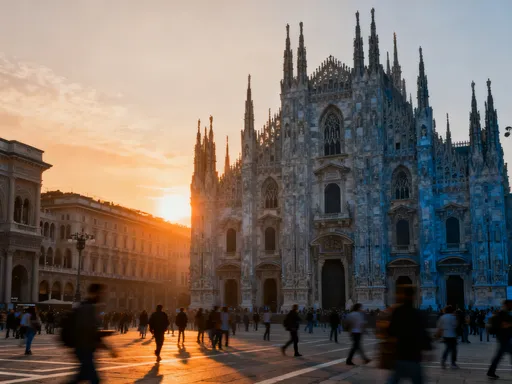
The Piazza del Duomo is more than a landmark — it is the architectural soul of Milan pulsing at the city’s core. Dominating the square, the Milan Cathedral, or Duomo di Milano, rises with breathtaking intricacy, its forest of spires and statues reaching skyward like stone prayers carved over nearly six centuries. This Gothic masterpiece, begun in 1386 and completed in 1965, reflects not just religious devotion but the ambition of an entire city striving toward perfection. Every surface tells a tale: saints, gargoyles, floral motifs, and celestial symbols etched into Candoglia marble, a luminous pink-veined stone quarried from the Alps and transported by canal to the heart of Milan.
What makes the Duomo so unforgettable is not only its scale — one of the largest churches in the world — but the way light transforms it throughout the day. At dawn, the marble glows with a soft rose hue, accentuating the delicate tracery of its façade. By midday, shadows deepen, revealing the depth of its sculptural details. As the sun dips below the rooftops, golden hour bathes the cathedral in a warm radiance, making the spires appear almost ethereal. For photographers, this dynamic interplay of light and texture offers endless creative possibilities. The rooftop terraces, accessible by elevator or stairs, provide a rare vantage point to walk among the spires, touch the stone saints, and gaze across the city skyline with the Duomo’s grandeur all around.
Timing is essential for capturing the Duomo without crowds. Arriving early in the morning, ideally before 8:30 a.m., ensures fewer people and softer light. Late afternoon, about an hour before sunset, offers dramatic backlighting and fewer tour groups. To photograph the full façade without distortion, use a wide-angle lens with a small aperture (f/8 to f/11) to maintain sharpness from foreground to spire. A tripod is helpful, though not always permitted in the busiest hours. Avoid shooting directly under harsh midday sun, which flattens textures and creates blown-out highlights. Instead, wait for partial cloud cover, which diffuses light and enhances depth.
For intimate details — a weathered saint’s face, an ornate rose window, a cluster of flying buttresses — a telephoto lens (70–200mm) allows you to isolate elements and emphasize patterns. Don’t overlook reflections: puddles after rain or polished marble surfaces can mirror the cathedral in surreal, artistic ways. And while the interior is worth visiting for its solemn atmosphere and dimly lit chapels, the exterior — especially from the north and west sides — offers the most compelling photographic angles. The Piazza del Duomo is not just a destination; it’s a masterclass in architectural storytelling, where every stone has a voice and every shadow adds meaning.
Hidden Courtyards & Secret Passages: Milan’s Offstage Beauty
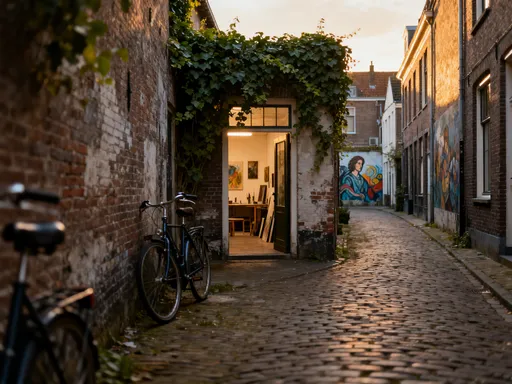
Beyond the grand façades and bustling streets, Milan holds a quieter kind of magic — its *cortili*, or inner courtyards, tucked behind unassuming entrances and often invisible to the casual visitor. These serene spaces, hidden within historic palazzos, reveal a different side of the city: one of symmetry, silence, and refined elegance. Unlike the theatrical drama of the Duomo, the cortili speak in whispers, their beauty unfolding slowly to those who seek them. Palazzo Isimbardi, now home to the Metropolitan City of Milan, offers one of the most accessible and striking examples. Its central courtyard, framed by graceful arches and classical columns, exudes Renaissance harmony. Sunlight filters through the open sky above, casting geometric shadows that shift with the hours, turning the space into a living sundial of light and form.
Another gem is Casa degli Omenoni, named after the “big men” statues adorning its façade, a 16th-century residence that now houses municipal offices. Its courtyard blends Renaissance structure with later Baroque embellishments — stucco details, ornamental ironwork, and a sense of layered history. These spaces were originally designed as private retreats for noble families, places of contemplation, conversation, and domestic life, shielded from the noise of the city. Today, they remain protected by their function — many are still part of government or institutional buildings — which ensures preservation and limits public access. Yet, they are not entirely closed off. Visitors can often enter during business hours, especially if the building hosts exhibitions or public services, provided they respect the space and follow guidelines.
To experience these courtyards authentically, approach with quiet reverence. Speak softly, avoid blocking walkways, and refrain from using flash or tripods unless permitted. The best time to visit is mid-morning on a weekday, when staff are present but foot traffic is light. Wear comfortable shoes, as some palazzos require climbing a short staircase or passing through security. Bring a standard or slightly wide lens (35mm to 50mm) to capture the full architectural proportions without distortion. Because these spaces are often enclosed, natural light comes from above, creating a soft, diffused glow ideal for even exposure. A polarizing filter can help reduce glare on marble or stone surfaces, enhancing texture and depth.
What makes the cortili so special for photography is their lack of visual clutter. Unlike the Duomo or Galleria, there are no crowds, no vendors, no modern distractions. The architecture stands unobstructed, allowing you to study proportions, arches, and the interplay of vertical and horizontal lines. Some courtyards feature fountains, potted plants, or benches that add life without disrupting the composition. By visiting these hidden spaces, you engage with Milan not as a tourist, but as a quiet observer of its enduring grace. They remind us that beauty often lies behind closed doors — and that patience and respect are rewarded with moments of pure architectural poetry.
Galleria Vittorio Emanuele II: Where Light, Glass, and Luxury Meet
Just steps from the Duomo, the Galleria Vittorio Emanuele II stands as a 19th-century marvel of engineering and elegance — a cathedral not of faith, but of commerce and light. Completed in 1877, this grand arcade connects Piazza del Duomo to Piazza della Scala and was one of the first examples of iron-and-glass construction in Europe. Its soaring glass-vaulted ceiling, supported by arched iron trusses, floods the interior with natural light, transforming the space into a luminous passage where architecture and daily life intertwine. The floor, a masterpiece in its own right, features intricate mosaic patterns in rich tones of red, green, and gold, forming geometric designs that guide the eye toward the central octagon beneath the golden dome.
At the center of that dome lies one of Milan’s most photographed details: the mosaic of a bull, symbol of the city’s ancient emblem. According to local tradition, spinning on the bull’s testicles brings good luck — a ritual that has worn a noticeable patch into the mosaic. While this moment draws crowds, photographers can capture it creatively by using a wide aperture (f/2.8 to f/5.6) to blur the surrounding tourists, focusing sharply on the bull’s head or the intricate tile work. The golden dome itself, adorned with frescoes and gilded details, is best seen in mid-morning light when the sun streams directly through the glass, illuminating the artwork in a warm, celestial glow.
The Galleria’s true magic unfolds during golden hour, when late afternoon sunlight angles through the glass, casting long shadows and highlighting the textures of marble columns, bronze lamp posts, and the ornate façades of luxury boutiques. Reflections on polished floors double the visual impact, creating symmetrical compositions that feel almost surreal. To capture these effects, position yourself near the center of the arcade and shoot toward the light, using a lens with image stabilization to avoid blur in lower light. A polarizing filter can enhance contrast between glass and metal, while a slightly elevated angle — from a café balcony or upper-level walkway — reveals the full geometry of the space.
Despite its luxury brands and constant foot traffic, the Galleria remains deeply woven into Milanese daily life. Locals pass through on their way to work, pause for an espresso at historic cafes like Camparino, or meet under the dome as a landmark rendezvous. This blend of grandeur and routine makes it a dynamic subject for street photography. To minimize distractions, shoot early in the morning (before 9 a.m.) when the arcade is quieter and cleaning crews have just polished the floors. Avoid weekends if possible, as the space becomes densely packed. The Galleria is not just a shopping destination — it is a living monument to light, structure, and the rhythm of urban elegance.
Brera District: Artful Alleys and Elegant Facades
North of the Duomo, the Brera district unfolds like a painting come to life — a maze of cobblestone streets, ochre-toned buildings, and ivy-clad walls that exude artistic refinement. Once a hub for artists and intellectuals, Brera remains Milan’s cultural heart, home to the Pinacoteca di Brera, historic ateliers, and a network of quiet piazzas where time seems to slow. Its architecture is not about spectacle, but harmony — a careful balance of proportion, color, and texture that creates a sense of intimate beauty. Wrought-iron balconies drip with geraniums, shuttered windows frame glimpses of inner gardens, and centuries-old doorways hint at stories within.
Walking through Brera, one notices how the buildings relate to one another, forming a visual rhythm. Facades are rarely uniform, yet they complement each other through shared materials — warm brick, stucco, and stone — and consistent rooflines. Arches appear frequently, both in doorways and internal passages, creating natural frames for photographs. The Via Fiori Chiari and Via dei Giardini are particularly photogenic, with their narrow lanes, overhanging eaves, and dappled light filtering through plane trees. These streets invite slow exploration, rewarding those who look up, down, and around with unexpected details: a carved lintel, a vintage shop sign, a cat sunning on a windowsill.
For photographers, Brera offers a wealth of compositional opportunities. Use a 35mm or 50mm lens to capture street scenes with context and depth. Frame shots through archways to create layers, drawing the viewer into the image. Look for reflections in puddles or shop windows to add dimension. Morning light, especially between 8 and 10 a.m., casts soft shadows and enhances the warm tones of the buildings. Late afternoon brings golden light that glows on brick and stone, perfect for portraits or architectural details. Because Brera is a residential neighborhood, maintain a respectful distance when photographing people or private homes. Avoid using flash in narrow streets, as it can disturb residents.
The district’s artistic legacy is still visible in its artisan boutiques — frame makers, bookbinders, and ceramicists who preserve traditional crafts. These shops, often housed in centuries-old buildings, contribute to Brera’s timeless atmosphere. Piazza Brera, anchored by the Palazzo di Brera, offers a central gathering space where locals sip coffee under plane trees, and the architecture opens up to reveal the dome of the church of Santa Maria del Carmine. Here, the blend of culture, community, and design creates a space that feels both lived-in and luminous. Brera teaches us that beauty does not require grandeur — sometimes, it is found in the quiet elegance of a well-proportioned doorway or the way light falls on a cobblestone lane.
CityLife District: Milan’s Bold Leap into the Future
Just west of the historic center, the CityLife district marks Milan’s confident stride into the 21st century. Once the site of the 1940 World’s Fair, this redeveloped area now hosts a striking skyline defined by three twisting skyscrapers, green parks, and bold architectural statements. The Unicredit Tower, designed by Daniel Libeskind, soars 231 meters as Italy’s tallest building, its angular form slicing upward like a shard of glass and steel. Nearby, the curved silhouette of the Generali Tower and the dynamic lines of the Pirelli Tower (a renovated mid-century modern icon) complete a trio that redefines Milan’s silhouette. These buildings are not just functional offices — they are sculptural landmarks that dialogue with the city’s past while asserting its modern identity.
What makes CityLife compelling for architectural photography is the contrast it creates with Milan’s historic core. From the park below, the skyscrapers rise against a backdrop of Baroque domes and Gothic spires, creating a visual narrative of continuity and change. The district’s green spaces — including the large CityLife Park — offer ideal vantage points. The park’s lawns, lakes, and walking paths allow photographers to frame the towers with reflections, leading lines, and natural framing. Early morning is ideal, when fog or mist can soften the skyline, and the glass façades catch the first light in shimmering hues. Sunset brings warm tones that contrast with the cool metallic surfaces, especially when the buildings are illuminated at night.
To capture the scale of these structures, use a wide-angle lens (16–35mm) from a low angle, placing foreground elements like trees or benches to emphasize height. A tripod is essential for long exposures, especially after dark when the towers are lit. Reflections in the park’s water features can double the impact, creating symmetrical compositions. For detail shots, a telephoto lens isolates the patterns of glass panels, sunshades, and structural joints. The district also features public art and modernist benches, adding layers to the urban landscape.
CityLife is more than a business district — it is a statement about sustainable urban development. The buildings incorporate energy-efficient systems, green roofs, and pedestrian-friendly design. Walking through the area, one senses a different rhythm — quieter, more spacious, yet still connected to the city’s pulse. Rooftop bars like Cloud 27 offer elevated views, though reservations are recommended. By visiting CityLife, photographers engage with Milan not as a museum of the past, but as a living, evolving metropolis where innovation and tradition coexist in dynamic balance.
Sempione Park & Castello Sforzesco: Power, Proportion, and Peace
At the northern edge of central Milan, Sempione Park unfolds as a green sanctuary framed by history. At its heart stands the Castello Sforzesco, a massive Renaissance fortress originally built in the 15th century by Duke Francesco Sforza. With its crenellated walls, central courtyard, and five imposing towers, the castle speaks of military strength and political power. Yet today, it houses museums, art collections, and peaceful gardens, transforming its legacy from fortress to cultural haven. The contrast between its stern exterior and the softness of the surrounding park creates a powerful visual tension — one of stone and soil, strength and serenity.
The main entrance, marked by the Arco della Pace (Arch of Peace), offers one of Milan’s most iconic views. From the arch, the long central path of the park stretches toward the castle, flanked by trees and bordered by fountains. This axial alignment, typical of Renaissance urban planning, creates a natural leading line for photography. Shoot from ground level at sunrise, when mist rises from the grass and the castle emerges like a silhouette, or from an elevated position near the arch for a symmetrical composition. The reflection of the castle in the park’s pond, especially in still morning air, doubles its grandeur and adds a dreamlike quality to images.
Inside the castle, the Cortile d’Onore (Courtyard of Honor) is a masterpiece of proportion and light. Surrounded by arched galleries, the open space feels both monumental and intimate. The stonework, though weathered, retains its dignity, and the play of shadows across the arches changes throughout the day. Photographers can use a standard lens to capture the full courtyard or a telephoto to isolate details — a column capital, a wrought-iron lamp, a patch of ivy climbing the wall. The castle’s towers offer panoramic views of the park and city, accessible during museum hours.
Sempione Park itself is a haven for nature and architecture alike. Sculptures, fountains, and the modernist Aquarium building add visual interest, while the open lawns invite contemplation. The blend of military history and natural beauty makes this area ideal for reflective photography — images that capture not just form, but feeling. Whether shooting the castle at golden hour or a lone bench beneath autumn trees, the message is clear: power need not be harsh, and history can nurture peace.
From Tram Lines to Tile Patterns: Finding Style in the Everyday
Milan’s architectural magic does not reside only in cathedrals, castles, or skyscrapers — it lives in the details. A closer look reveals a city rich in texture, color, and craftsmanship. Art Nouveau tiles adorn building façades in neighborhoods like Porta Venezia, their floral patterns and pastel hues glowing in morning light. Vintage tram stop shelters, with their curved glass and cast-iron frames, stand as functional relics of early 20th-century design. Iron staircases spiral up building exteriors, their intricate balustrades casting delicate shadows on stone walls. Even manhole covers, shop signs, and door knockers bear the mark of thoughtful design.
These everyday elements offer endless inspiration for macro and detail photography. A 100mm macro lens allows you to isolate a single tile, capturing the crackle of aged glaze or the depth of hand-painted motifs. Shoot at midday when the sun is high, creating sharp contrasts and revealing surface textures. Look for reflections in wet streets after rain — a tram’s red body mirrored in a puddle, or the pattern of a tiled wall doubled on a shiny surface. Black-and-white photography works beautifully here, emphasizing form, line, and contrast without the distraction of color.
Take the time to wander without a destination. Let your eye be drawn to the unusual — a weathered door, a patch of peeling paint, a bicycle leaning against a wrought-iron gate. These moments are not just photographs; they are fragments of Milan’s soul. The city’s design ethos — where beauty and utility coexist — is evident in every tram line, every cobblestone, every handcrafted detail. By slowing down and observing closely, you begin to see that architecture is not just about buildings, but about the way a city cares for its surfaces, its streets, and its stories.
Milan’s architecture isn’t just about grand monuments — it’s a layered conversation between past and future, public and private, light and shadow. Each photo you take adds to that dialogue. Whether you're framing a cathedral spire or a cobblestone reflection, you’re not just capturing a place — you’re connecting with its rhythm. So grab your camera, wander with curiosity, and let Milan’s walls tell you their stories.